



Sathyanarayan Rao, PhD

Computational Scientist · Scientific R&D
Modelling, Sensing & Scientific AI

I make hard scientific problems computable.

I've worked on plasma physics, optoelectronics, geoelectrical sensing, crop models, remote sensing and hydrology. The problems changed; computation stayed the common element — numerical modelling, differential equations, scientific software and data.

More recently AI has become another part of that toolbox, both for scientific computing and for evaluating frontier AI systems on hard scientific problems.

Sathyanarayan Rao

Currently

Apr 2025 →

Research Associate

Indian Institute of Science (IISc), Bengaluru

Earth-observation research on soil moisture and watershed hydrology in semi-arid Karnataka — satellite retrieval, field measurement and causal evaluation of watershed interventions.
May 2026 →

Scientific AI Expert

Mercor Intelligence

Scientific evaluation and refinement of frontier AI systems, including models before public release. I write hard scientific problems, find where models fail, and study whether they are reasoning through a problem or recognising it.

What I've worked on

Different problems, same tools

I didn't plan this as one continuous research programme. I moved across problems that looked interesting and used computation on them.

  1. 2010–2013

    Plasma physics

    UA Huntsville

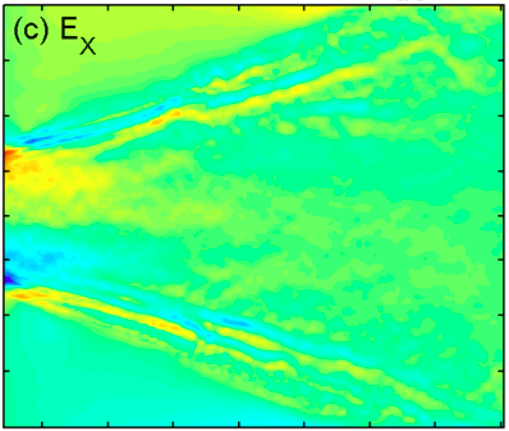
    Particle-in-cell simulation extended from 2D electrostatic to 3D electromagnetic, parallelised with MPI/OpenMP.

    Simulated Ex field showing wave structure in a helicon plasma plume
  2. 2013–2016

    Optoelectronics

    Alabama A&M · Paderborn

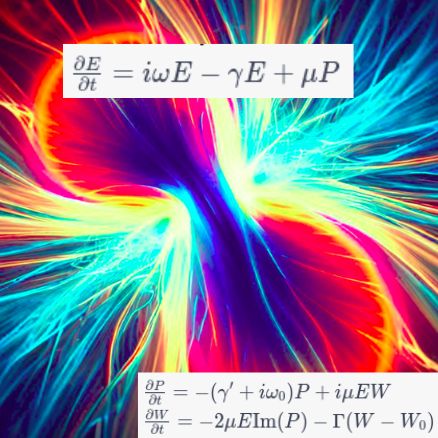
    Laser–matter interaction experiments, then Fortran Maxwell–Bloch solvers for light propagation in excitonic systems.

    Maxwell-Bloch equations for a two-level excitonic system
  3. 2016–2020

    Geoelectrical root sensing

    UCLouvain

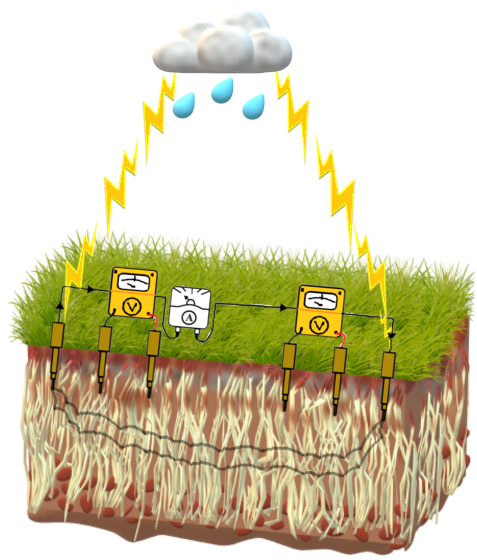
    Coupled hydro-geophysical models linking root architecture, water uptake and electrical signature — field and laboratory ERT.

    Field electrical resistivity survey over a grass root zone
  4. 2023–2025

    Agricultural digital twins

    Forschungszentrum Jülich

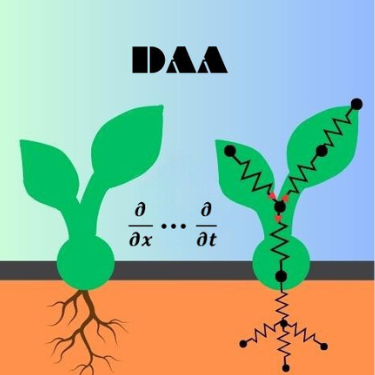
    Coupling process-based crop models with functional–structural root models across C/C++, Fortran and Python.

    Digital Agricultural Avatar: a plant and its coupled model representation
  5. 2025–

    Earth observation & hydrology

    IISc Bengaluru

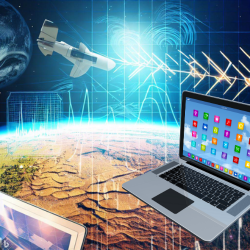
    Sentinel-1 soil moisture retrieval, active–passive fusion with SMAP, and decade-scale watershed evaluation across semi-arid Karnataka.

    Satellite Earth observation feeding computational analysis
  6. 2026–

    Scientific AI

    Independent · Mercor

    Writing hard scientific problems and evaluating how frontier models handle them — running alongside the hydrology, not after it.

The last two are happening at once. Watershed hydrology at IISc and frontier-AI evaluation are both current work — not consecutive chapters.

Research

Five questions

All projects →

Publications

Recent peer-reviewed work

All 9 articles →
  1. Temporal variability predicts learnability in repeated-entity spatiotemporal sensing

    Rao, S. (2026)

    Nordic Machine Intelligence, 6(1), 39–54.

  2. Integrated modeling approaches for agricultural digital twins: the role of process based models, agent based models, machine learning, and model coupling

    Rao, S., Ahmadi, S. H., Leitner, D., Vianna, M., Bauer, F. M., Seidel, S. J., Schnepf, A. (2026)

    in silico Plants, 8(1), diag002.

  3. Sensing the electrical properties of roots: A review

    Ehosioke, S., Nguyen, F., Rao, S., Kremer, T., Placencia-Gomez, E., Huisman, J. A., Kemna, A., Javaux, M., Garré, S. (2020)

    Vadose Zone Journal, 19(1), e20082.

Writing

Recent

All writing →

Books

Published

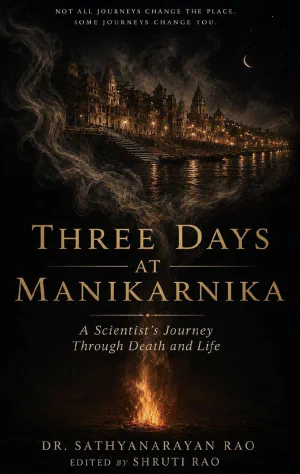
Cover of Three Days at Manikarnika
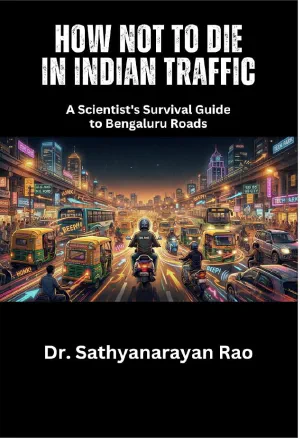
Cover of How Not to Die in Indian Traffic
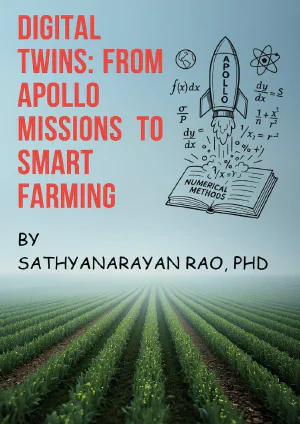
Cover of Digital Twins
All books →

Deprecated

Still compiles. No longer the recommended path.

The full changelog →

Twenty years of learning to compute, written out as a version history. Each stage solved something the previous one couldn't, and each has since been superseded.

  1. v1.0 2006

    First program

    C++ at BMSIT, Bengaluru. Sorting algorithms, microcontroller assembly, and MATLAB filters. Believed at the time that programming was technically inferior to designing circuits and antennas.

  2. v2.0 2010

    The cluster

    Fortran and MPI at Huntsville. A 2D electrostatic particle-in-cell code extended to 3D electromagnetic, parallelised, and queued overnight. Submit, sleep, hope. A wrong sign in a boundary condition cost a day, so you learned to read your own code properly.

  3. v3.0 2016

    Inverse problems

    Python at UCLouvain. Root architectures into meshes into finite-element electrical models — up to 500,000 tetrahedra — and back out as something you could compare against a field measurement.

  4. v4.0 2023

    Coupling

    Jülich. Less about writing code than about making other people's codes talk to each other across C, C++, Fortran and Python, with timestep synchronisation and two-way state exchange. Then containerising it so the result would still run somewhere else.

  5. v5.0 2025

    Agents

    The loop writes itself now. What does not write itself is the decision about which problem is worth posing, whether the answer is actually right, and how you would know. That turns out to be most of the job.